A practical look at demo sessions, independent spin outcomes, Australian legal considerations and checks before real-money play.
Free play can let you spend time with a pokie without putting your own money at stake. If a free-play option is available for the game you are considering, it can help you get a feel for the experience: how a session unfolds, how you respond to its pace, and whether you enjoy spending time with it. That can be useful when you want to explore without turning the session into a financial decision.
Searching for Big Red free pokies, or for a free version of a particular pokie, does not by itself establish that a specific game or mode is available. If you find a free-play option, treat it as a way to experience that mode, not as evidence of what would happen if you later played for money. The distinction matters because the result of a free session cannot tell you what a real-money session will return.
A pokie’s results are generated spin by spin. A Random Number Generator determines the outcome of each spin, and one spin does not depend on the one before it. A run of wins in free play does not make a win more likely next time; a run without a win does not mean that a win is due. The same applies if you later stake money: past outcomes do not set the result of the next spin.
This can be easy to lose sight of during a long session. A sequence may look as though it is forming a pattern, especially when similar outcomes appear close together. But a pattern you notice in a set of results does not provide a reliable reading of what comes next. Free play can show you a sequence of outcomes; it cannot turn that sequence into a forecast.
 Regional Pokies in Australia: City and State GuideExplore regional pokies and casino search topics across Australian cities and states, including online pokies, live casino, keno and payout-focused searches.
 Fast Payout Online Casinos in Australia: What to CheckLearn how casino withdrawal approval differs from funds arriving, and what to check in payment timing, identity reviews, withdrawal terms and wagering…
It also helps to separate two different questions. “Do I like this experience?” is something free play may help you answer. “Will this pokie pay me, and how much?” is not. Even an extended free session cannot establish what a later session will return. There is no dependable conversion from free results to real-money results, and the apparent success of one session does not make another one predictable.
For instance, if a free session produces several favourable outcomes, that is a description of what happened in that session—not a signal that the same pattern will continue when you play again. If it produces little that feels rewarding, that does not prove a later session will be the same. Each new spin is determined on its own, so neither a positive nor a disappointing run gives you a dependable basis for estimating future returns.
Free play may also feel different from staking money because the consequences are different. When no money is at risk, it can be easier to keep playing without thinking about the value of each decision. That difference is worth noticing rather than overlooking. A free session can help you decide whether the activity holds your attention, but it cannot show how you will feel when money is involved, or what the financial result of that later play will be.
A sensible way to use free play is to keep the purpose narrow. Pay attention to whether you enjoy the session and whether you are comfortable with its pace. Do not treat a particular result, a streak, or the number of spins as evidence of future performance. And do not use free play as a test that a game is likely to provide a return: it cannot answer that question.
If you are looking for free Big Red pokies, the useful point is not whether a free session happens to go well. It is whether trying the experience without a stake gives you information about your own interest in playing. The outcomes themselves remain outcomes of that session alone. They do not promise, predict, or improve the result of a later spin, whether that later spin is free or played for money.
That boundary keeps free play in perspective. It can offer a low-stakes way to become familiar with a pokie experience, where such an option is offered, and to decide whether you want to continue exploring it. It cannot establish a likely payout, reveal a dependable winning pattern, or tell you what a future real-money session will return. A free result belongs to the spin that produced it; the next one is a fresh random event.
If you’re looking for big red pokies online in Australia in 2026, the details available for each operator can help you assess what is relevant to your choice. Use this list as a reference, and check any terms that matter to you before signing up.
Lucky Dreams
You can note that Lucky Dreams lists a Curaçao licence and a A$20 minimum deposit via POLi.
Ricky Casino
You have a stated A$20 minimum deposit, rising to A$30 to qualify for the bonus. Its listed payout times are under an hour for crypto and 1–3 business days for PayID.
SkyCrown
You can note SkyCrown’s Tobique Gaming Commission licence and A$30 minimum deposit. Its stated payout times are around 10–15 minutes for crypto and 1–5 days for fiat.
LuckyVibe
You can note LuckyVibe’s stated Curaçao Gaming Control Board licence, OGL/2023/176/0095, under Hollycorn N.V.
DragonSlots Casino
You can note DragonSlots Casino’s stated Curaçao Gaming Authority licence under Jumpman Gaming Ltd.
Golden Pokies
You can note that Golden Pokies lists a Curaçao licence.
GoldenCrown
You can note GoldenCrown’s stated Curaçao Gaming Control Board licence, OGL/2023/176/0095, under Hollycorn N.V.
SpinsUp
You can note SpinsUp’s stated Curaçao Gaming Control Board licence, OGL/2023/174/0082, under Dama N.V.
Thor Casino
You can note Thor Casino’s stated Curaçao licence through Antillephone N.V. (Versus Odds B.V.) and its EUR 20 minimum deposit.
JeetCity Casino
You can note JeetCity Casino’s stated Curaçao eGaming licence under Dama N.V.
If you are looking at Big Red pokies online from Australia, the first thing to understand is that the legal question is not decided by a game’s name, theme or popularity. It turns on whether a company is allowed to provide online casino-style gambling to people in Australia. Under the Interactive Gambling Act 2001, offering real-money online pokies to Australians is prohibited unless the operator holds a domestic licence. No domestic licences for online casinos have been issued, so there is no Australian-licensed online casino.
That distinction matters because a website may describe itself as an online casino or point to a licence from another country. Neither description creates an Australian licence. The Australian framework does not provide a domestic licensing route for online casinos, and an overseas authorisation is not a substitute for one. The same legal position applies whether the game is called a pokie, a slot or something else: online casino-style games offered for real money to people in Australia fall within the prohibited services covered by the law.
The rules are directed at the companies providing the service, rather than making the individual player the target of the Interactive Gambling Act. That does not make an offshore casino Australian-regulated, or mean Australian consumer protections apply to it. It is useful to keep those points separate: the law’s focus on operators is one issue; the status and protections of a particular website are another. This section is about the legal framework, not an endorsement of any site or a suggestion to play.
 Online Casinos in Australia: What Trust MeansLearn how trust claims differ from legal protection, why offshore winnings have no Australian legal recourse, and what to check before depositing.
 Best Pokies in South Australia: What to CheckLearn how to assess pokie claims, check venue details and plan a visit. The same game may have different RTP settings at…
The Australian Communications and Media Authority, known as ACMA, is the main domestic regulator responsible for enforcing the Interactive Gambling Act 2001. Its work includes taking action in relation to illegal online gambling services. One part of that enforcement is blocking access to offshore gambling sites that breach the rules.
When ACMA places a site on its blocklist, Australian internet service providers are required to comply. As a result, a site that was accessible at one point may later be blocked. A block is an enforcement measure; it does not turn a site into a lawful Australian casino, nor does the absence of a block amount to approval. The legal status depends on the law and the service being offered, not simply on whether a page loads.
This can be confusing when you encounter a website through an old link, an advertisement, or a discussion elsewhere. A functioning page is not proof that the operator has permission to offer real-money pokies in Australia. Equally, a blocked address is not a signal that a different address for the same service has become authorised. ACMA’s role is to enforce the rules, while internet providers carry out the blocking requirements placed on them.
Legal Status
Offering real-money online pokies to Australians is prohibited unless the operator holds a domestic licence, and no such licences have been issued.
The phrase “Big Red” does not create a special legal category. If a site offers real-money online pokies to people located in Australia, the relevant question remains whether the operator is permitted to provide that service under Australian law. Since no Australian online casino licences have been issued, there is no locally licensed online casino through which such play can take place.
The wording used by a site can also blur important distinctions. A company might use terms such as “international,” “offshore” or “licensed” to describe its operation. Those labels do not establish that it holds an Australian licence. The point is not whether a site uses convincing language or looks familiar; it is that Australia has no licensed online casino market for real-money pokies.
The same framework applies across online casino games, rather than only to a particular title or provider. A search for Big Red online pokies may lead to pages that discuss games, but those pages do not change the legal position. The law concerns the provision of the gambling service to people in Australia. It is not made lawful by the game being offered under a recognisable name or by the operator being based overseas.
For readers, the practical takeaway is to treat Australian legality and website access as separate questions. ACMA enforces the prohibition on unlawful online casino services and can have illegal offshore gambling sites blocked by internet providers. A site appearing in search results, opening on a device or carrying claims about an overseas licence does not establish that it is an Australian-licensed casino. There is no such licensed online casino in Australia.
The decision to stake money on an offshore site carries a different risk from trying a game without a stake. Australian law targets the operators providing prohibited online casino services, not individual players. Australians can legally play on offshore sites that accept them, but that does not give you the protections or remedies of an Australian-licensed online casino. There is no Australian-licensed online casino, and if an offshore casino refuses to pay your winnings, you have no legal recourse in Australia to recover them.
That distinction matters if you are considering Big Red pokies for real money. A site accepting Australian customers does not mean its decisions can be challenged through an Australian casino regulator. Before putting money at risk, be clear about what you can and cannot do if a withdrawal is delayed, declined or disputed. Treat the possibility of not receiving winnings as a real financial risk, rather than assuming that a site’s terms or customer support will resolve every disagreement.
A withdrawal can involve more than requesting a transfer. A specialist review describes casinos asking for identity checks before a player’s first withdrawal. The documents may include a photo of your identity document and proof of your address; a selfie holding the identity document may also be requested.
Read the casino’s own verification and withdrawal terms before depositing. Check which documents it may ask for, how they must be submitted and whether there are conditions that could delay or prevent payment. Keep your details consistent across the account and documents. If the requirements are unclear, or the site does not explain how to complete verification, do not assume you can sort it out after a win.
You should also consider whether you are comfortable sending sensitive documents to an offshore operator. Verification may be a condition of withdrawing, but submitting documents does not guarantee that a casino will approve a claim or pay winnings. An account balance shown on a screen is not the same as money received in your bank account.
BetStop is Australia’s national self-exclusion register, but it applies only to Australian-licensed operators. It does not bind offshore casinos. If you have registered with BetStop, do not assume that an offshore site will block access, prevent account use or stop its own communications. The register cannot provide that protection outside its scope.
If you are using BetStop to help control gambling, relying on it to restrict offshore play could leave a gap. Consider that limit before opening or using an offshore account, especially if self-exclusion is important to keeping gambling away from you.
The practical point is not that every offshore site will refuse a withdrawal, but that Australian remedies are not available if one does. Verification checks can also arise at the point you try to cash out, not only when you create an account. If you decide to proceed, understand those conditions beforehand and do not stake money you cannot afford to lose.
Before you consider playing Big Red, decide what boundaries you would need to keep gambling from affecting your essential spending, time, or wellbeing. A limit is useful only if it is set before a session, while you can still make a calm decision. It should not be treated as a target to reach or a figure to increase after a loss.
Deposit limits can restrict how much money you add to an account. A loss limit focuses on the amount you are prepared to lose, while a session time limit can help prevent play from continuing longer than intended. These are standard responsible-gambling tools. Their purpose is to place a boundary around gambling, not to make a session safer in every respect or change its outcome.
Choose limits with your ordinary financial commitments in mind. Money needed for rent, bills, food, debts, or other essentials should not be part of a gambling budget. If you find yourself raising a limit because you are chasing losses, or returning to play sooner than planned, treat that as a sign to stop rather than a reason to revise the boundary.
Time limits matter as well. A session can feel shorter than it is when attention is fixed on the game. Decide in advance when you will stop, and do not extend the session because a result feels close or because you want to recover money. A time boundary is most helpful when it is clear and practical enough to follow without negotiating with yourself during play.
BetStop Limitation
BetStop is Australia's national self-exclusion register, but it applies only to Australian-licensed operators and does not bind offshore casinos.
Self-exclusion is another standard safeguard. It is intended for someone who wants to prevent or restrict their access to gambling, rather than simply pause for a session. Read the terms carefully before relying on it: the scope depends on the service or scheme involved. BetStop applies only to Australian-licensed operators and does not bind offshore sites. It should not be treated as a way to block access everywhere.
The legal age for gambling in Australia, including online pokies, is eighteen. If you are under that age, you must not gamble. If you are an adult, meeting the age requirement does not mean that gambling is suitable for your circumstances. Consider whether you can follow the boundaries you set and whether gambling is affecting your finances, relationships, work, or mood.
It can help to write down your deposit, loss, and time boundaries before opening a game, then leave them unchanged during the session. If a service offers limit-setting or self-exclusion tools, check what each setting covers and how it works before depending on it. Do not assume that one setting applies to every account or gambling service.
If you cannot keep to your own limits, stop and seek support rather than trying to recover losses with more play. A pause is also appropriate if gambling is causing stress or interfering with ordinary responsibilities. Personal safeguards are not a guarantee against harm, but they can make your intentions clearer and give you a point at which to step away.
If you want to try Big Red pokies without staking money, free play can offer a way to experience play without putting money at risk. Its value is limited, though: what happens in a no-stake session cannot tell you what a later session will return. A run of wins, a long stretch without one or a particular balance shown during free play is not a forecast.
The reason is how each spin works. A pokie uses a Random Number Generator (RNG) to determine the result, and every spin is a separate random event. The outcome of one spin does not set up, improve or worsen the result of the next. A sequence that looks as if it is building towards a win has no predictive force; neither does a sequence of wins suggest that another is due.
That independence applies whether you are playing without a stake or with one. Free play does not generate a different kind of evidence about what a later real-money session will pay. It may show you how a particular stretch of play unfolds, but it cannot establish whether you will win later, how much you might win, or how long a losing run could last.
It helps to separate two ideas that can easily blur together: experiencing play and estimating future results. Free play may serve the first purpose. You can spend time with a game without staking money and see what a session feels like. But a session is only the set of random outcomes that occurred during that session. It does not reveal a reliable pattern to carry into another one.
Attention: A sequence of outcomes in free play cannot be turned into a forecast for real-money play, as every spin is determined independently by a Random Number Generator.
This matters when a session seems unusually favourable or unusually poor. A few rewarding results can create confidence that the game is likely to pay again; a disappointing stretch can make a win seem overdue. Neither conclusion follows from the previous spins. Random results can form short runs that feel meaningful, but those runs do not change the odds of the next individual outcome.
Nor does a free-play balance represent money you have won or an amount you should expect to collect later. It is part of a no-stake experience, not a promise about what a future session will produce. Treating it as a target for real-money play can turn an entertaining trial into a misleading benchmark.
A useful way to approach free play is to keep its purpose narrow. Use it, if available, to spend time with the game without staking; do not use the results to decide that a future session is likely to be profitable. You can enjoy a favourable run without reading it as a signal, and you can stop after an unremarkable one without assuming the game owes you a better outcome.
The distinction is simple but important: free play can give you a session without a stake, while the RNG still makes each spin independently. What happened in that session remains in the past. It cannot tell you what the next spin, or a later session, will return.
A demo lets you look at how a pokie is presented and operated without treating the session as a money-making test. If a Big Red-themed demo is available, it may help you inspect that particular game’s screen and controls. It cannot establish what a later session will return, or prove that outcomes in another mode will match what you saw.
Use the session to get familiar with the information the game actually displays. You can check where the spin control is, how the bet setting is presented, and whether the rules or paytable are easy to find. If the game explains symbols or features, read those explanations rather than assuming that an animation or sound signals a particular result. The demo can also show you the visual pace of play and whether the interface is clear enough for you to follow.
These observations are about presentation, not prediction. A run of wins, losses or near-misses in a demo does not tell you what will happen on the next spin. Each pokie spin is an independent event determined by a Random Number Generator (RNG). Previous outcomes do not set up, improve or reduce the chances of a particular result on a later spin.
That matters even if a demo seems to develop a pattern. A sequence can look meaningful because people naturally notice repeated symbols or changes in fortune, but it does not make the next outcome due. Nor does a short session provide a dependable estimate of what you might receive in a different session. Treat what you observe as information about the game’s visible operation, not a forecast.
A demo may also differ from the way a game is presented elsewhere. The screen can help you understand the rules and controls available in that version, but it does not by itself confirm that another casino offers the same game, settings or experience. If a detail matters to you, rely on the information shown for the specific version rather than inferring it from a demo you have seen before.
The useful question is therefore a modest one: can you understand the interface and the rules it displays? A demo can help with that. It cannot tell you whether a future session will be favourable, and no previous spin changes the random nature of the next one.
A pokie’s return percentage is not necessarily a fixed figure shared across every casino offering the same title. A specialist review reports that some game providers give casinos a choice of RTP settings for a particular game. Where that arrangement applies, the same pokie can therefore have different stated return percentages at different casinos.
RTP means return to player. It is a percentage associated with a game setting, not a promise about what you will receive from a session. A higher figure should not be read as a forecast that your next spins will pay more, or as a guarantee of any particular outcome. It describes the setting’s stated return measure; it does not settle what happens in an individual play session.
This distinction matters when you compare information about a game. A figure shown for a title in one place may not describe the setting used elsewhere. Even when the game name is identical, the relevant percentage can depend on the casino’s selected configuration. Treating one published figure as universal could therefore give you an incomplete comparison.
If a casino displays an RTP figure, check whether the information identifies the specific game version or setting it applies to. If that connection is unclear, the figure alone may not tell you which configuration is in use. A game’s name, artwork or familiar presentation cannot establish its return setting.
The distinction also has limits: the fact that providers may offer a choice does not mean every provider does, or that every casino has access to multiple settings for every game. It does not confirm that a particular setting is available for any specific pokie. Nor does a stated percentage establish anything about the fairness or licensing of the site displaying it.
For anyone looking into Big Red pokies, the sensible point is to separate a game’s identity from its RTP configuration. Do not assume that a percentage attached to a title elsewhere applies to the version you encounter. Where the setting is not clearly identified, avoid treating the figure as a dependable basis for comparing that game with another.
A request to download a pokie can lead to a file, an app listing or a page that opens in a browser. None of those, by itself, confirms that a particular game is available to Australian players or that the provider is authorised to offer it. Do not assume that a download link is a reliable way to reach a game if a site cannot be opened.
Device Security
Be wary of requests to disable device security features or install software to bypass blocks, as these do not make a prohibited service legitimate.
ACMA blocks access to illegal offshore gambling sites, and Australian internet service providers are required to follow its blocklist. As a result, access to a blocked site may not work through your usual connection. A page failing to load is not a reason to look for another route around the block. Avoid using links or installation instructions that claim to restore access; they do not change the site’s status or remove the risks of dealing with it.
The same caution applies when a page invites you to install software before showing a game. Check what the file is and who is providing it before allowing it onto your device. Be wary of requests for unnecessary permissions, unexpected downloads, or instructions to disable device security features. If you cannot establish what an installation does, do not proceed. A browser page that appears to load a game does not, on its own, prove that access is permitted or that the service is safe.
There is no basis to assume that a named pokie has a dedicated mobile app, a downloadable version or a working browser option. Availability can depend on the site and the access available from your location, and an app’s presence in a store would not establish that it is suitable for use in Australia. Avoid treating a familiar title, logo or download button as proof.
If you are trying to open a game and encounter a block, stop there rather than seeking workarounds. ACMA’s blocklist is part of how access to illegal offshore gambling sites is restricted in Australia; changing devices or installing software does not make a blocked service legitimate. Keep the decision simple: do not install a file or continue to a site when you cannot verify what it is and why it is being offered.
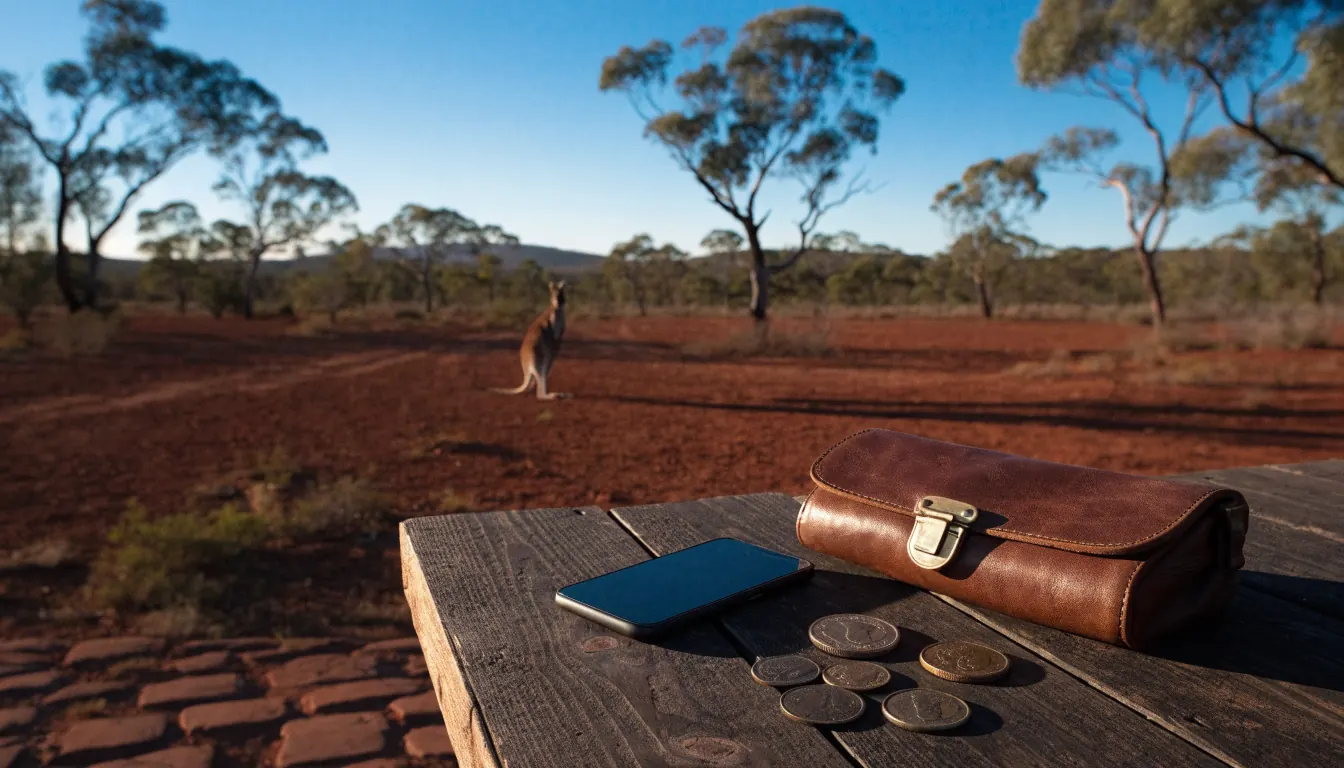
“Big Red Kangaroo” may sound like the name of a particular pokie, but the wording alone does not establish that a specific game exists under that title. It also cannot tell you what its symbols, bonus features, paytable or presentation might be. Those details should not be inferred from the words in a name.
The same caution applies to availability. A title mentioned in a conversation or shown in an image is not, by itself, proof that a game is currently offered or that it can be opened where you are. Without reliable information identifying the exact game, claims about its features or access would be guesswork. It is better to leave those details unsettled than to treat an assumed description as fact.
What can be said about pokie play is how each spin works: a Random Number Generator determines the result, and each spin is an independent event. A kangaroo theme, if a game has one, would not change that principle. Nor would a previous result provide evidence about the next spin. A run of similar outcomes does not create a pattern that can reliably predict what follows.
This matters when a name seems familiar or a game is described as having a distinctive feature. A title, theme or anecdote cannot show that a particular result is due, or that a player has found a method for anticipating it. The outcome of an individual spin remains random.
If you encounter a reference to a Big Red Kangaroo pokie, separate what is actually identified from what is merely suggested by the name. Do not assume a particular set of features, a provider or a playable version without dependable confirmation. Most importantly, do not treat a description of a game as evidence about its results. The only sound general point is that pokie spins are independent RNG events; the name itself cannot tell you what a future spin will return.
You must be 18 or older to gamble online in Australia.
Companies cannot legally offer real-money online pokies to Australians without a domestic licence, and no Australian online casino licences have been issued. The law targets operators, not individual players, but offshore sites are not Australian-regulated and you have no legal recourse in Australia if one refuses to pay.
It is the amount you must bet to meet a bonus’s turnover multiplier before you can withdraw winnings. For example, a $500 bonus with a 40x requirement means $20,000 in bets; if the requirement applies to a $500 deposit plus a $500 bonus at 35x, it means $35,000 in bets.
There is no strategy that can predict or improve the outcome of the next spin: each spin is an independent random event. Past wins or losses do not make a future result more or less likely.
There is no Australian-licensed online casino, so an offshore site is not regulated as an Australian online casino. If it refuses to pay, you have no legal recourse in Australia.
Yes. Some game providers let casinos choose from multiple RTP settings for the same pokie, so its return percentage can differ between casinos.